

For Individuals & Caregivers
Voluntarily Stopping Eating and Drinking (VSED)
Voluntarily Stopping Eating and Drinking (VSED) accelerates a natural way to die; considering individuals near death experience little to no hunger or thirst. Before beginning the process, it is important that you find support from your caregivers, friends, family and physician.
The VSED process is voluntarily refusing nutritional and fluid intake, with the understanding this will result in death. If nutrition and fluids are received through a PEG tube or IV hydration, these therapies must be stopped as well.
Unlike the Death with Dignity Act, VSED does not require a terminal 6 month or less prognosis. It takes determination and support, but it is usually not painful and can lead to a peaceful death.
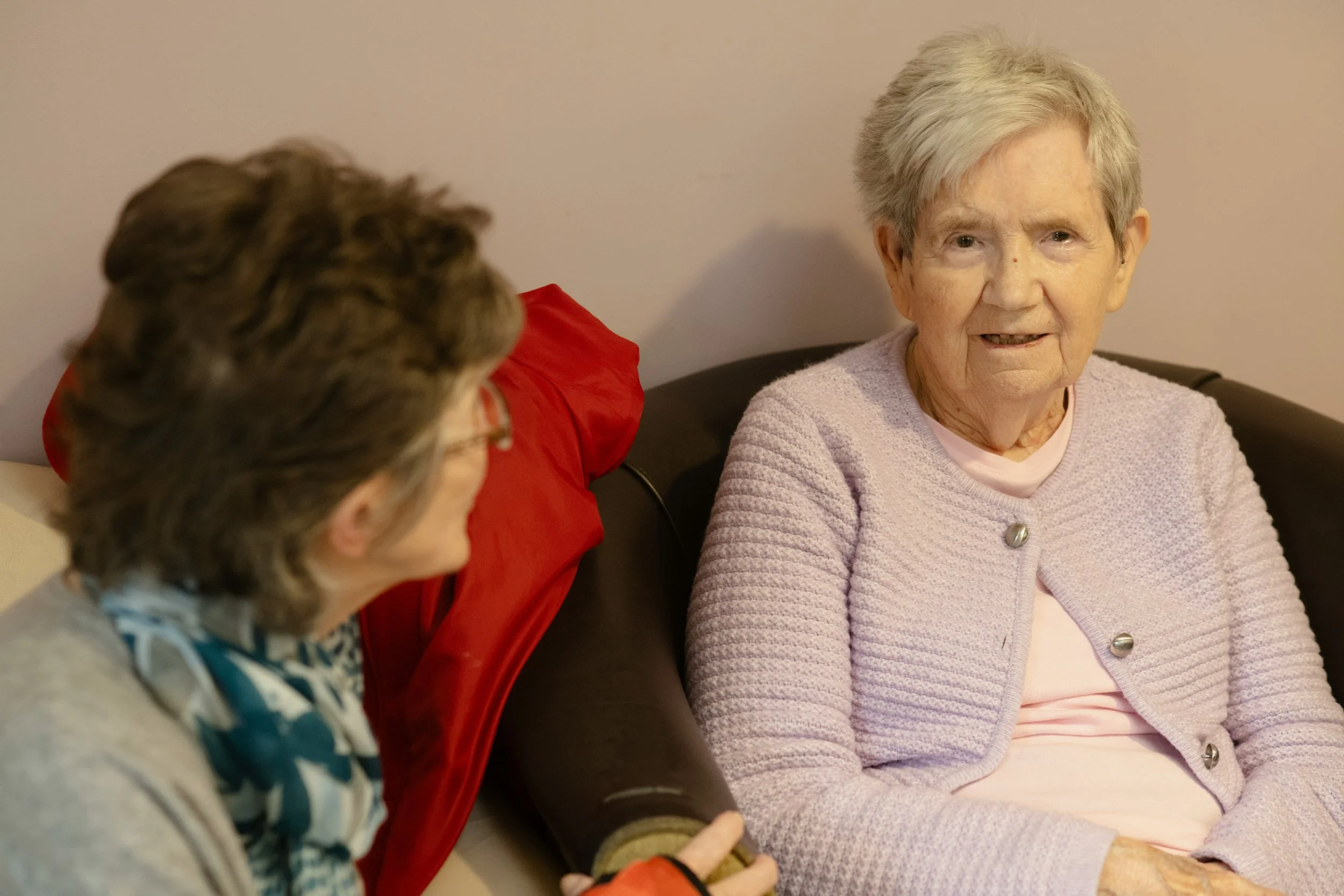
EOLCOR volunteers do not provide bedside care during the VSED process, but we can offer:
Education and guidance about the process.
Assistance organizing and providing resources for setting up VSED support (hospice, death doula, etc.)
This may include the assistance of your family and friends to, paid caregivers or hiring an experienced death doula to provide 24-hour care.
Check-ins throughout the dying process to provide further guidance and support.
Reasons for Using VSED
Suffering without a 6-month or less life expectancy.
Early-stage dementia and wanting to avoid a long and slow death.
Can no longer swallow.
Cannot wait the 15-day qualification period for the Death with Dignity Act and the expedited period is not a viable option.
Negative effects from eating and/or drinking.
Moral or religious objections to Medical Aid In Dying.

Before beginning VSED, provide documentation of this end-of-life choice, such as an Advance Directive, a witnessed note, or a video recording stating your intention to use VSED. It is most helpful to record a video so this can be shown to you later if you forget. It may also be helpful to show friends, family members, and hospice if anyone questions your decision. A POLST form should also be completed to withhold life sustaining therapies and resuscitation efforts.
You should not do VSED alone! You need 24-hour caregiving support for the entire process, usually lasting 2-3 weeks. Weakness and lightheadedness can happen suddenly and result in falls and injuries. Hospice expertise is essential and highly recommended.

Sample Script:
“I want you to know my wishes for the last days of my life. Quality of life is more important to me than quantity. When I can no longer tolerate my suffering, I plan to stop all food and fluids. I would like you to keep me comfortable during my last days, even if it means I sleep for days before I die. If my care cannot be managed in my home, I would like to be transferred to a care facility with hospice support. I have the full support of my family and friends regarding my decision.”
If you are considering VSED, having an open and thorough conversation with your healthcare providers is essential to determine if they will provide medications and other services for comfort care. Not all clinicians have experience with VSED, and their willingness to provide support can vary, so it's important to have this discussion as soon as you have made the decision to pursue VSED.
Discussing VSED with Your Physicians
Specific Questions to Ask Physicians
Can you think of any barriers that might prevent me from carrying out VSED?
Will you continue to care for me if I proceed with stopping food and fluids?
Will you prescribe medications to decrease thirst and hunger, such as morphine and lorazepam, before hospice care starts?
I know hospice will not initiate care until a few days into the VSED process when I can no longer care for myself. Will you refer me to “pre-hospice” now to facilitate a smooth transition into hospice later?
If your physician recommends a mental health evaluation, it is suggested you do so.
Frequently Asked Questions
-
No, a terminal prognosis is not required for an individual to utilize VSED. EOLCOR provides information and support to individuals without a 6-month terminal prognosis, when (a) the person suffers from an incurable, progressive illness; and (b) the person is a legally competent adult, able to understand the risks and benefits of VSED.
-
No. You do not need a physician’s permission, but it is important to have physician support during the process. They may need to prescribe medication for pain and anxiety. They can also provide a referal to hospice for additional support during the process.
-
Individual experiences doing VSED can vary greatly. Some who choose to stop eating and drinking may find a sense of peace. However, this process can also be rigorous and is not the right choice for everyone. It is important to have adequate symptom management. Hunger pangs and thirst may occur in the first few days, however, those who are weak from their illness may become comatose within 4-5 days.
-
If a person stops eating and drinking, death may come as early as a few days, but more commonly takes 1-3 weeks. If the patient continues to have even small amounts of liquid, the process will take longer. It is difficult to predict exactly when death will occur. It depends on the person’s general condition, age, and illness.
-
It takes some determination, but we often find that those who make this choice are ready to die and can be successful.
-
Your physician may recommend that all medications be stopped, except for those for pain or other discomfort. Stopping medications for heart problems or diabetes, for example, may speed up the process. You must talk to your physician about all your medications.
-
You can live for a very long time without eating, but dehydration (lack of fluids) is what speeds up the dying process. Dying from the lack of food alone can be more prolonged and uncomfortable than refusing food and liquids.
-
Talk to your loved ones early about your wishes and why you may want to take this course. It is helpful to record a video to show friends, family members, and hospice if anyone questions your decision.
VSED Medications
Once you enroll in hospice, medications to relieve pain and anxiety are available in forms that are not ingested. Examples of these are concentrated liquids that are absorbed through the lining of the mouth, transdermal patches, and suppositories. Liquid medications, such as morphine and lorazepam, can be applied in between the cheek and gum to decrease the sensation of thirst. Since many medications are taken with water, you should work with hospices or your primary care physician to review and stop medications not needed for comfort.
Good oral care is also imperative. The use of artificial saliva, such as Biotene, may be helpful.
If you are already utilizing hospice services, include your hospice nurse(s) in your plans for VSED, they are familiar with caring for patients who stop eating and drinking. If you are not enrolled in hospice, you can request a referral from your primary care physician for “pre-hospice” because you will meet the criteria once you are a few days into the VSED process.
Suggested Remedies for VSED Symptoms
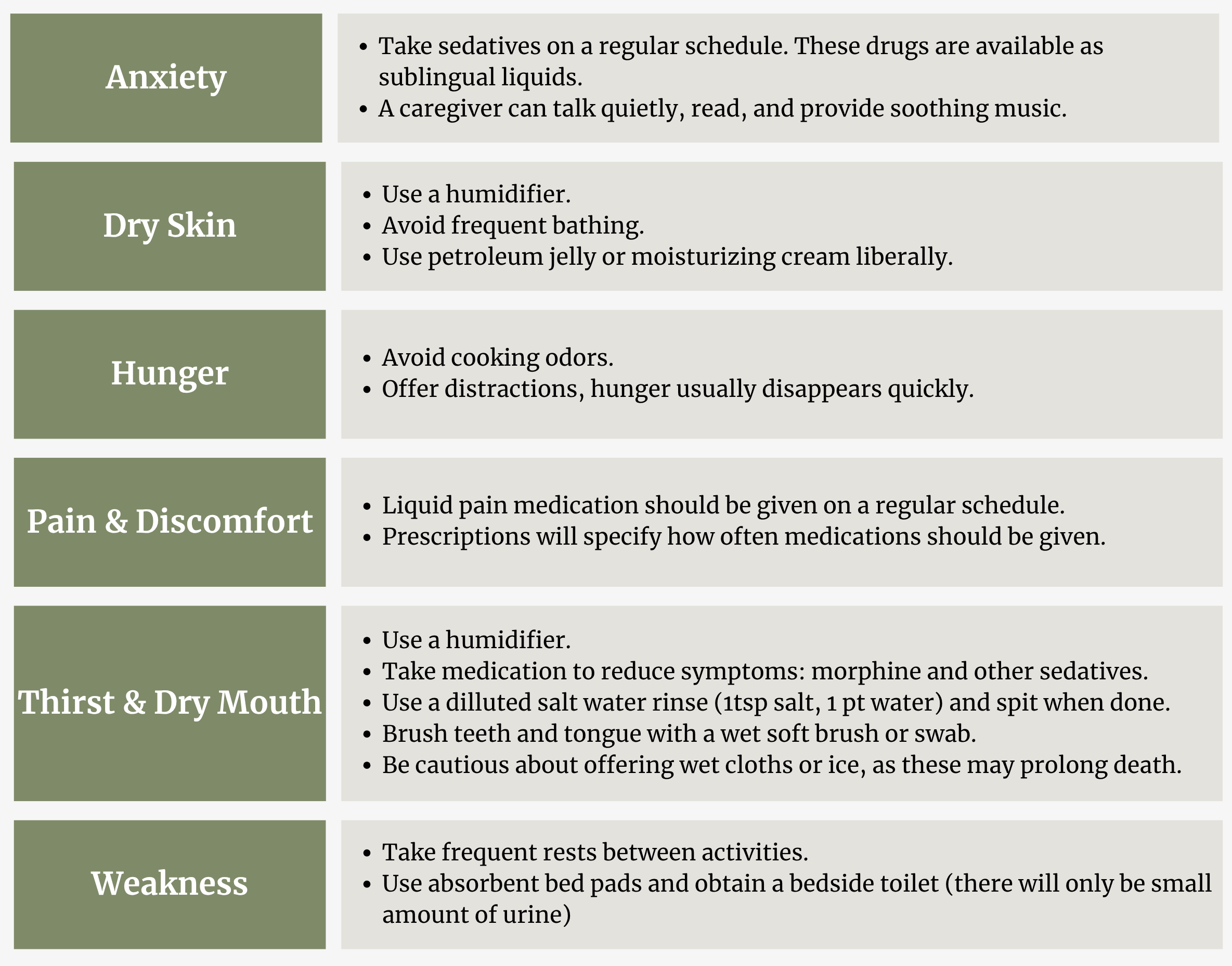
During the initial days of the VSED process, you may still be active. During this time, you may experience thirst, dry mouth, and hunger. These symptoms can be relieved with medications and avoiding food odors. Around the third day, weakness and prolonged sleep occur. Later, you will go into a coma and not wake up. The time before a coma offers you time to change your mind about continuing the VSED process. The length of time to death is variable and depends on your general condition, age, and illness.
Nursing Care Facilities
If a nursing care facility is the only place available for you to do VSED, choose a facility that fully supports VSED. There have been instances where residents have been force-fed when they were confused or too weak to refuse. You or your healthcare advocate should meet with the facility director to review your needs and make sure the facility director agrees to have all staff comply with your wishes. A sign should be put in a prominent place stating, "Nothing by Mouth" or "No Food or Fluids”. If you have a feeding tube, it should be removed because staff have fed residents through the tube against their wishes. Request hospice services to supervise your care. The director should be contacted if you or your healthcare advocate have any concerns.
VSED Clients with Disabilities
If you have a disability and are not diagnosed with a terminal illness, be aware of right-to-life organizations. These organizations can interfere when they know an individual with a disability is choosing to use VSED. Use caution when informing others about your choice to use VSED and encourage your caregivers to document the level of care and resources you have had to prevent claims that the choice to die was due to lack of support and services.
Assisting Families with Policies
If there are problems with your care facility not cooperating with your wishes to pursue VSED, you or your healthcare advocate can contact the Oregon Long-Term Care Ombudsman at 1-800-522-2606 or Itco.info@rights.oregon.gov. These ombudsman may need some education about VSED and your particular case, but they are influential, do not hesitate to involve them.
Printable Information:
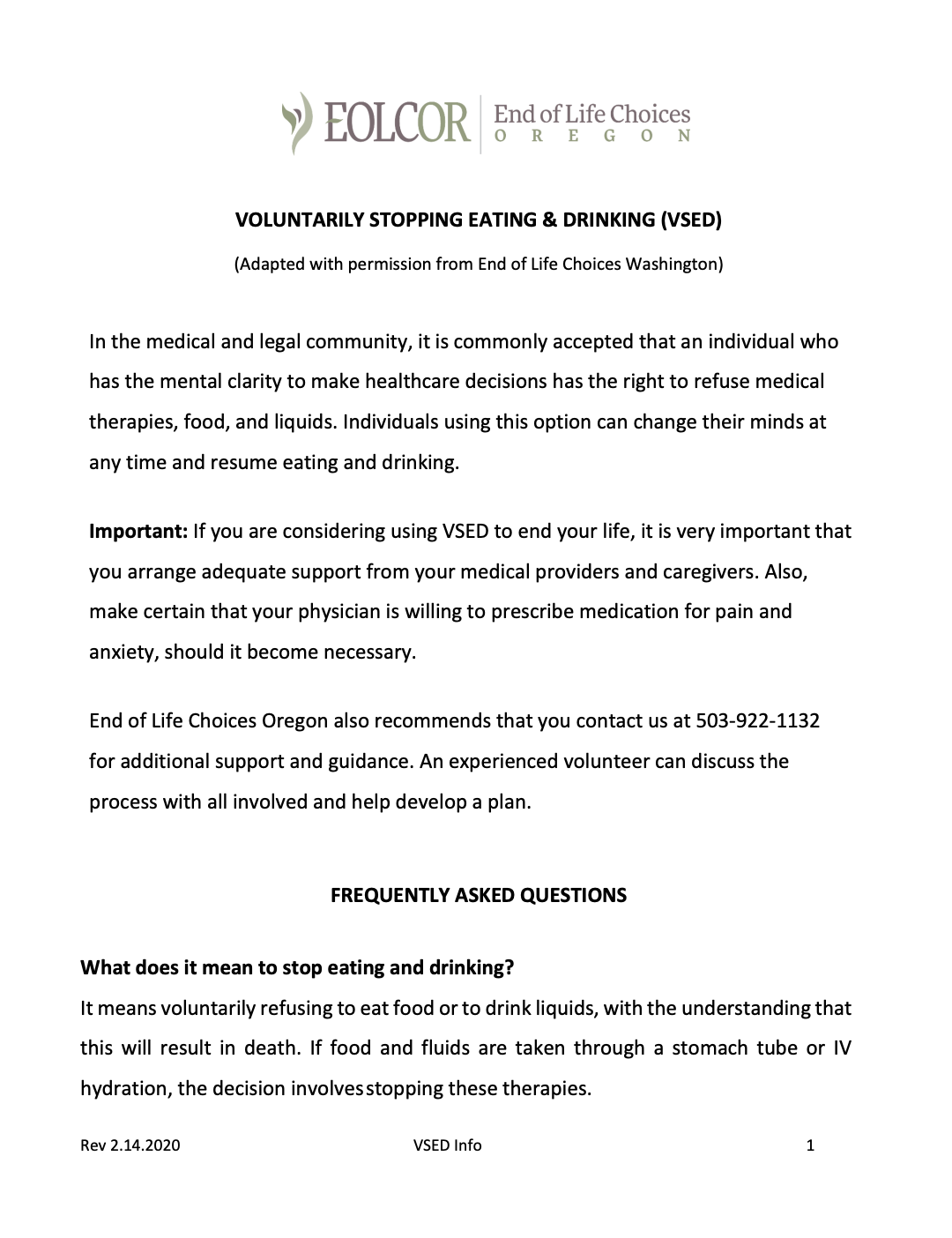
EOLCOR VSED Packet
This 12-page PDF contains detailed information, common questions, and other resources around VSED.
Additional Resources:
VSED Resources Northwest
VSED Resources Northwest are VSED advocates, palliative care professionals, and family members of those who have chosen VSED. Their website has a great deal of helpful information for those interested in learning more about Voluntarily Stopping Eating and Drinking (VSED).